Intersectionality in Nepal: Law, Power, and the Quest for Substantive Social Justice
Introduction
Nepal is a socially diverse country, characterized by diversity in caste, gender, ethnicity, class, religion, geography, and language. The Constitution of Nepal, 2015, guarantees equality, social justice, and inclusion. However, the realities on the ground show that discrimination is usually not based on a single factor. Instead, people often experience multiple and overlapping forms of marginalization. The persistence of caste-based discrimination, gender violence, political exclusion, and economic marginalization suggests that injustice in Nepal is structural and intersectional, rather than singular or isolated.
Intersectionality describes how different social identities relate to each other: gender, caste, ethnicity, class, and disability, all include and point to unique forms of discrimination and disadvantage. In the Nepali context, the theory of intersectionality assumes significance in understanding why some groups, such as Dalit women, Madhesi women, indigenous women, or disabled persons from poor backgrounds, remain disproportionately marginalized despite legal guarantees of equality. Intersectionality, a theory developed by Kimberle Crenshaw, critiques a legal system which breaks down and categorizes discrimination in various compartments. The theory reveals how a person situated in an intersection of different marginalized identities can be doubly excluded in a manner that cannot be captured within a one-axis framework. Crenshaw’s discussion of structural, political, and representative intersectionality is highly pertinent to the realm of law. Structural intersectionality focuses on the overlapping disadvantages created by law; political intersectionality focuses on the politics of marginalization for those who occupy multiple identities; and representative intersectionality critiques the displacement of complexity by law.
In the Nepali context, intersectionality allows a deeper analysis of how constitutional equality interacts with caste hierarchy, patriarchy, and socio-economic inequalities. The intersectional inequalities in Nepal have historical roots. The Muluki Ain of 1854 institutionalized the caste hierarchy to legitimize unequal punishments, access to justice, and social status per caste and gender. Patriarchy, caste hierarchy, feudal land relations, and religious norms collectively shaped the Nepali social order. Patriarchy, caste hierarchy, feudal relations of land, and religious norms together constitute the social order in Nepal.
Women, Dalits, indigenous nationalities or Adivasi Janajati, Madhesis, and religious minorities have conventionally been denied participation in state power and resources. When more than one identities are together, such as Dalit women or Madhesi Dalit women, degrees of discrimination are additive rather than additive.
Constitutional Vision of Equality and Social Justice
The Constitution of Nepal offers an extensive provisions for equality and social justice. Article18 states equality in the presence of laws and does not promote discrimination by reasons of, inter alia, caste, sex, religion, ethnicity, and origin. Article 38 establishes special rights to women, Article 40 addresses discrimination of Dalits in past times, and Article 42 addresses social justice by equal representation in state institutions.
Yet, in the presence of such progressive measures, the concept of equality in the Nepalese
Constitution maintains itself as a “categorical recognition.” This is where marginalized communities are perceived to be homogeneous internally, without considering the dynamics of inequality within and the multi-marginality of disadvantaged groups. The concept of
intersectionality exposes how equality in such a context may be reduced to a mere “precarious principle” that is disconnected from the realities of society. The Constitution of Nepal of 2015 promotes equality, social justice, proportional inclusion, and special safeguards for marginalized social groups. However, on the application of the principle of intersectionality, the gap between equality in theory and equality in practice becomes abundantly clear. The “legal mechanisms” address identities isolated as women, the “Dalits,” or “minorities” but do not address “overlapping identities.” Consequently, “policies may favor privileged women but exclude ‘Dalit’ or ‘Poor’ women. This impugns the “quota in representation” as it may not capture inherent hierarchies in social groups. Moreover, “Justice mechanisms” may remain inaccessible to the disadvantaged groups who are multi-marginal.”
Judicial Engagement with Equality and Marginalization
The Supreme Court of Nepal has been very instrumental in setting precedents in equality
jurisprudence. For instance, in the case of Meera Dhungana vs. The Government of Nepal, it invalidated some discriminatory provisions relating to inheritance, accepting that equality can sometimes hide in formal equality presented by laws that are equal in practice but are, in effect, unequal.
The Court reiterated in the case of Sapana Pradhan Malla v. The Government of Nepal that
equality needs to be understood within the context of reality and disadvantageous history. The Court repelled formalistic thinking and admitted that formally equal laws can disproportionately affect women in the light of existing sociological conditions.
A landmark expansion of equality jurisprudence occurred in the case of Sunil Babu Pant v.
Government of Nepal, where the Court extended constitutional protection to sexual and gender minorities. In so doing, the Court recognized dignity and equality as dynamic principles that must protect marginal identities. Though the case focused on sexual orientation and gender identity, it implicitly acknowledged the intersectional vulnerability by addressing exclusion from various legal and social domains.Caste discrimination as a form of discrimination has also been disapproved of in the courts. In the case of Advocate Radheshyam Adhikari vs. Government of Nepal, the Court held that untouchability was not in consonance with the constitutions morality and the dignity of humanity. Yet the analysis on the part of the judiciary has not largely explored the dimensions of caste discrimination in relation to gender, poverty, and geography.
Gender, Caste, and Structural Disadvantage
The Dalit woman stands to be one of the most marginalized sections of Nepalese society because of the combined effects of “caste, patriarchy, and deprivation." These women are especially vulnerable to violence, exclusion, and exploitation. Legally, there are measures in place to deal with violence committed on women, but in implementation, there is a lack of consideration for the effects of caste and social Backlash. The mere nature of discrimination that Dalit women suffer is not the same as that of Dalit men and women from upper castes. Any legislation that deals with gender and violence separately, without the impact of castes and discrimination on the basis of castes, without the impact of gender, will structurally be inadequate.
Access to Justice and Institutional Inequality
The provision for justice is under Article 20 in the Indian Constitution. However, the aspect of justice has inequality in it. People living at the intersection of caste, gender, poverty, and being rural are faced with difficulties like lack of finance, linguistic barriers, social influence, and insensitivity. Procedural access alone does not ensure justice. Legal institutions often reflect dominant social norms and power relations, making them inaccessible or hostile to marginalized communities. Without addressing these structural barriers, access-to-justice mechanisms risk reproducing inequality under the guise of neutrality.
Formal Equality and Its Limits
Formal equality assumes that equal treatment under law produces equal outcomes.
Intersectionality challenges this assumption by demonstrating that individuals begin from
unequal social positions. Laws that ignore these disparities may inadvertently reinforce existing hierarchies. In Nepal, formal equality has often failed to address entrenched caste and gender hierarchies. Intersectionality calls for a shift toward a substantive equality approach that recognizes differential impacts and seeks to dismantle structural disadvantage rather than merely prohibiting overt discrimination.
Towards an Intersectional Constitutional Jurisprudence
An intersectional approach offers a transformative framework for constitutional interpretation in Nepal. It encourages courts to move beyond abstract formalism and adopt context-sensitive reasoning grounded in lived experience. For policymakers, it demands legal frameworks that recognize overlapping vulnerabilities rather than isolated identities. Embedding intersectionality within constitutional and judicial reasoning would strengthen affirmative action measures, improve access to justice, and ensure that inclusion is meaningful rather than symbolic. Such an approach aligns with the Constitution’s broader vision of social transformation.
Policy Recommendations: Operationalizing Intersectional Equality in Nepal
For Nepal’s constitutional commitment to equality and social justice to move beyond declaratory ideals, intersectionality must be translated into concrete legal and institutional practices. An intersectional approach does not require constitutional amendment; rather, it demands a recalibration of interpretation, policy design, and institutional functioning within the existing constitutional framework.
Judicial interpretation must explicitly incorporate intersectionality as a principle of equality
adjudication. The Supreme Court of Nepal has already moved toward substantive equality in cases, yet judicial reasoning continues to address grounds of discrimination largely in isolation.
Courts should assess how multiple identities, such as caste, gender, class, and geographic
marginalization, operate simultaneously to produce distinct forms of disadvantage. Such an
approach would enhance constitutional interpretation under Articles 18, 38, 40, and 42, ensuring that equality analysis reflects social realities rather than abstract categories.
Affirmative action and proportional inclusion policies must be redesigned through an intersectional lens. Existing inclusion mechanisms often assume homogeneity within marginalized groups, resulting in the concentration of benefits among relatively privileged sub-groups. Intersectional policy design would recognize intra-group hierarchies and prioritize those experiencing compounded disadvantage, such as Dalit women, indigenous women from remote regions, and economically marginalized minorities. This would align affirmative action with the constitutional objective of substantive rather than formal inclusion.
Institutional capacity-building is essential to address structural bias within legal and administrative bodies. Courts, law enforcement agencies, and public institutions should receive systematic training on intersectional discrimination and structural inequality. Without
institutional sensitization, legal protections risk remaining inaccessible to those most in need, particularly individuals facing social stigma, fear of retaliation, or linguistic and cultural barriers.
Access to justice mechanisms must be reoriented to address intersectional barriers. While Article 20 guarantees the right to justice, procedural access alone is insufficient. Legal aid services, community-based justice mechanisms, and outreach programs must account for intersecting obstacles such as poverty, caste-based exclusion, gender norms, and geographic isolation.
Addressing these barriers would enhance the effectiveness of constitutional guarantees and strengthen public trust in legal institutions.Evidence-based policy making requires the collection of intersectional data. Current data systems often rely on single-category indicators that fail to capture overlapping vulnerabilities.
Disaggregated data based on caste, gender, ethnicity, disability, and geography would enable more accurate assessment of inequality, improve policy targeting, and facilitate monitoring of inclusion measures mandated by the Constitution. Legislative and policy frameworks should undergo periodic intersectional impact assessments.
Reviewing existing laws through an intersectional lens would help identify unintended
exclusions and differential impacts on marginalized sub-groups. Such assessments would ensure that legal reforms advance substantive equality and prevent the reproduction of structural disadvantage under formally neutral laws.
Conclusion
Nepal’s constitutional commitment to equality and social justice cannot be realized through
formal equality alone. Discrimination in Nepal is layered, historical, and structural, shaped by the interaction of caste, gender, class, and power. Intersectionality provides a critical framework to understand these dynamics and to expose the limitations of existing legal approaches. For Nepali laws to function as a genuine instrument of social justice, they must explicitly embrace an intersectional perspective. Only by acknowledging overlapping identities and systemic power relations can constitutional promises of equality and dignity be translated into lived realities.
About the Authors
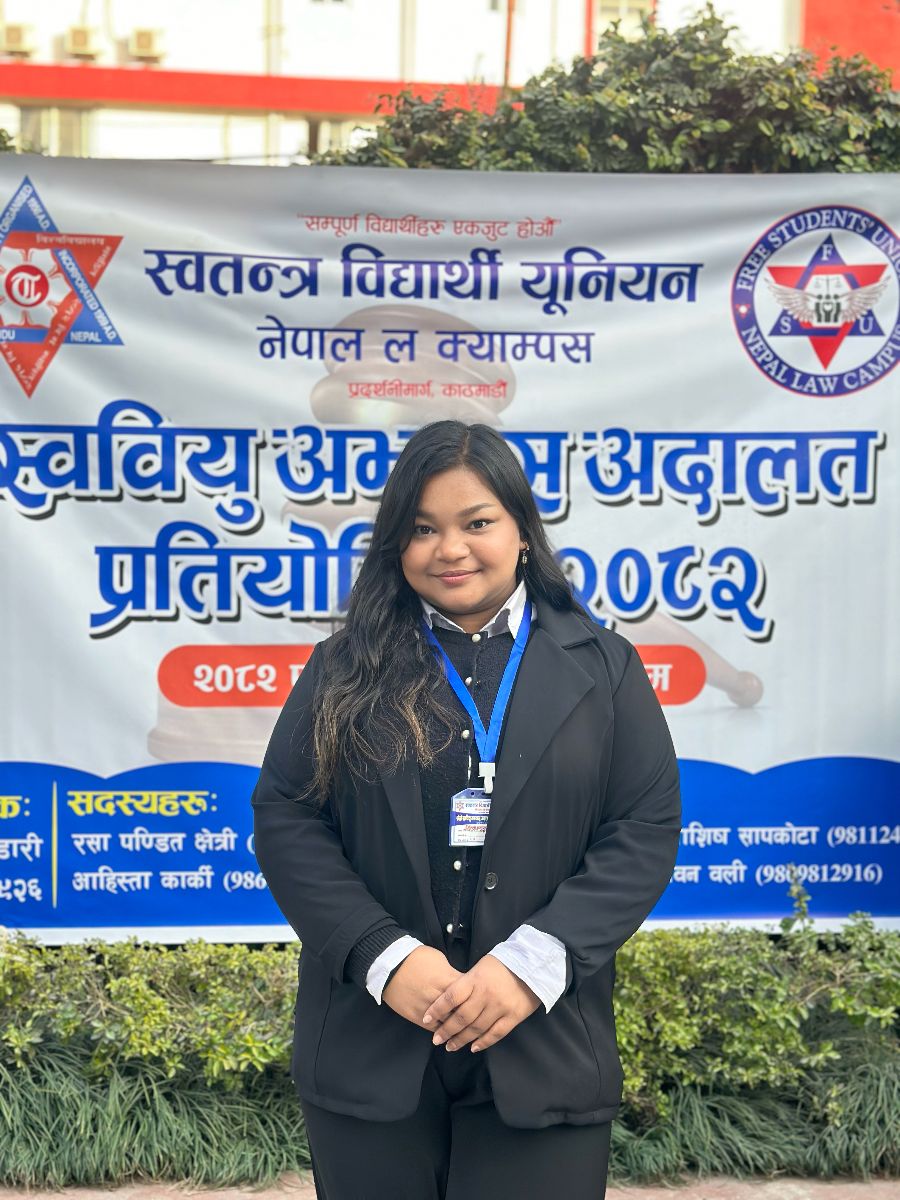
Kerina Ghatraj
Undergraduate law student at Nepal Law Campus, with a keen interest in constitutional law, human rights and social justice. Passionate about legal research, advocacy and rights-based reforms.
View all posts by Kerina Ghatraj